
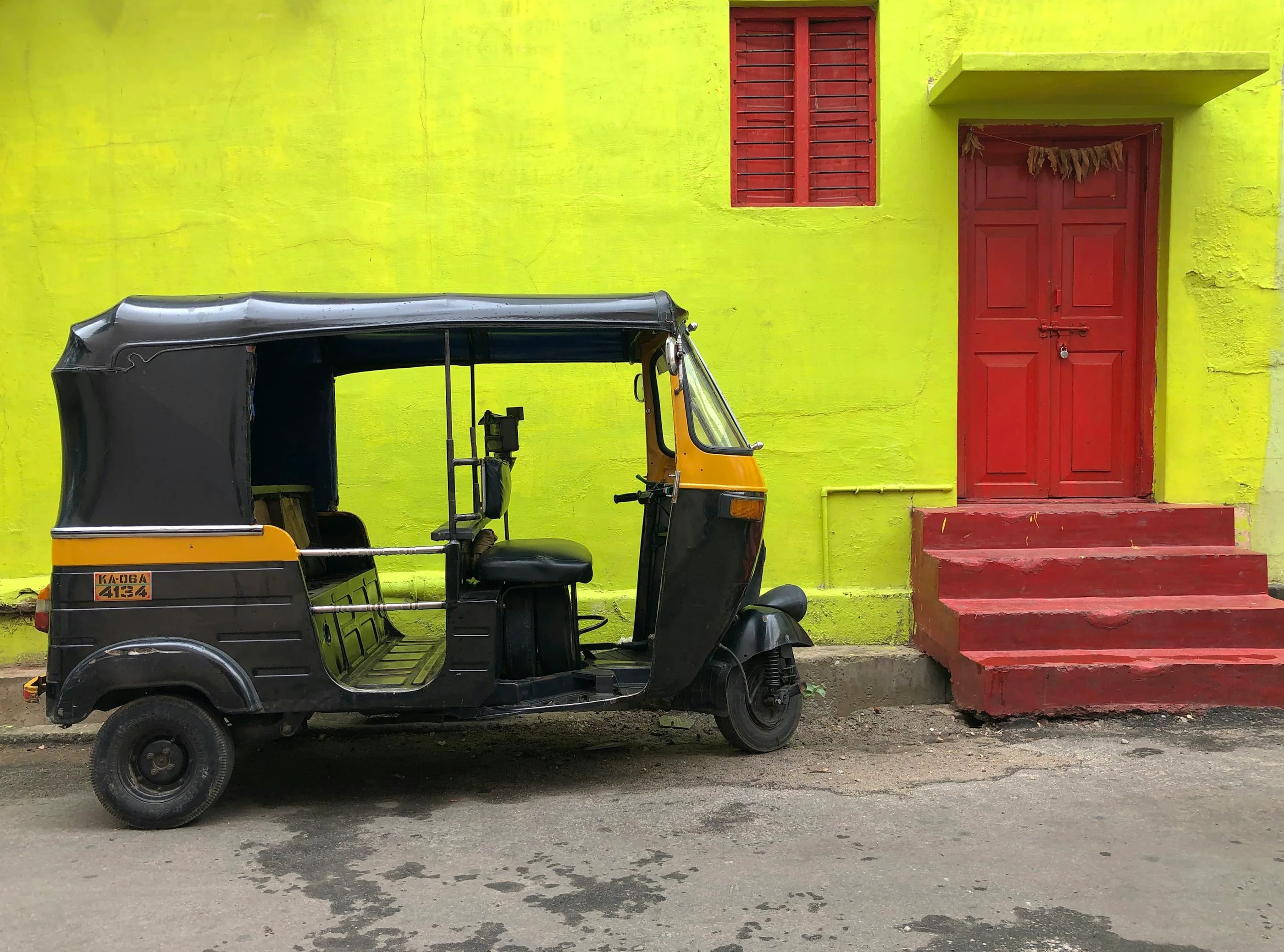
Indian-built motorcycles, three-wheelers and light commercial vehicles work well in African markets for a specific reason: they were designed for duty cycles that look a lot like the ones they meet there. Poor road surfaces, heavy loads, dust, long service intervals and repair rather than replacement. What follows from that is predictable — and predictability is exactly what a parts plan needs.
The mistake is treating parts as a reaction to failures. By the time a part is needed, the lead time has already been spent. A parts position is a forecast, and for these platforms the forecast is unusually reliable.
Parts fall into three bands, and they behave differently
Sorting a parts list by unit price tells you almost nothing useful. Sorting it by how often it is consumed tells you what to do.
- 01Consumables — air and oil filters, spark plugs, brake shoes and pads, cables, chain and sprocket kits, wiper blades. Consumed on a schedule, cheap per unit, and the entire reason a workshop keeps a customer. These should never be air-freighted, which means they should never run out.
- 02Wear items — clutch plates and kits, wheel bearings, fork seals, shock absorbers, suspension and leaf-spring bushes, tie-rod ends, U-joints. Consumed on a curve rather than a schedule, and heavily influenced by road surface and load. Volume rises sharply after the first 18 months of a fleet's life.
- 03Failure items — starters, alternators, water pumps, injectors, sensors, radiators, electricals. Low frequency, higher value, and the ones that immobilise a vehicle. Stock the ones with long lead times, not the ones with high prices.
The duty cycle changes the mix, not just the quantity
A commuter motorcycle in an urban rental fleet and the same model on rural unsurfaced roads consume different lists. The rural bike eats suspension, bearings, fork seals and chain kits; the urban bike eats brakes, clutch plates and electricals. Passenger three-wheelers running long hours consume clutch assemblies and brake shoes far faster than the service schedule implies, because the schedule was not written for fourteen-hour days.
So when a parts plan is being built, the useful questions are about the operation rather than the vehicle: how many hours a day, on what surface, carrying what, maintained by whom.
Order fast-movers by shipment, not by requisition
The economics of a parts programme are decided by consolidation. A container that arrives quarterly, carrying the consumables and wear items for the quarter ahead plus a thin layer of failure items, costs a fraction of the same parts ordered reactively in small air-freighted batches. It also keeps the workshop's promise to the customer, which is the part that does not appear on the invoice.
- Build a per-model consumption list from your own service records once you have six months of them, and from the platform's known pattern before that
- Order to a coverage period — a quarter, or a season — rather than to a reorder point
- Consolidate across models and OEMs into one shipment where the destination and the buyer are the same
- Keep failure items to the long-lead-time ones only, and let the locally available ones stay local
- Review the list after the first year against what actually moved; the second-year list is always different from the first
Genuine or aftermarket is a decision, not a default
Both are legitimate and they price very differently. Warranty work and safety-critical items usually justify OEM-genuine. General aftermarket resale and older vehicles out of warranty often do not. The failure mode is not choosing one over the other — it is not deciding, and ending up with a shelf that mixes both at genuine prices.
Tell a supplier which you want, per band if necessary. A parts enquiry that says “OEM-genuine for brakes and clutch, aftermarket for filters and bushes” is a better enquiry than one that says “best price”.
Packaging, labelling and identification
Small items that arrive in unmarked bulk cost the workshop time on every single job. Specify carton quantities, individual packaging where a part needs it, and labelling that carries the part identification in a form your storeman can read. If your market requires particular labelling on imported goods, that belongs in the enquiry rather than in a correction after the first shipment.
None of this needs to be perfect at the start. It needs to exist at the start, because a parts plan written in the first month is cheap and a parts plan written after the first stock-out is not.